
Salt in the air
Close to the sea, salt settles on walls and cladding. Left on the surface it stops new paint bonding, so every elevation is washed down first.
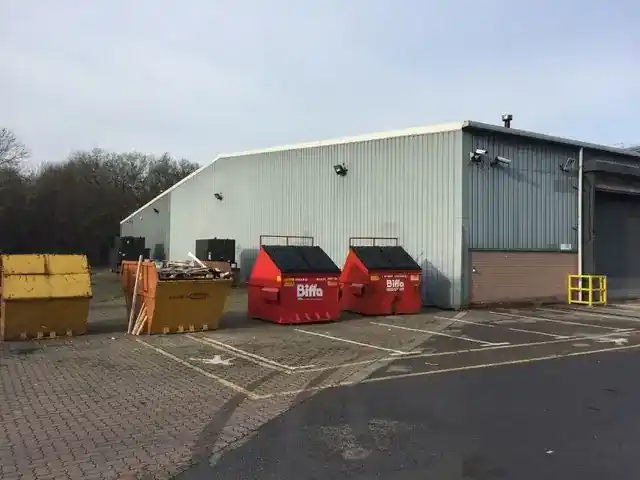
Walls, cladding and industrial units
Outside surfaces painted to cope with life on the south coast, by brush and roller or by spray, after the preparation that makes the coating last.
Outside work
A building’s outside is the first thing visitors and customers notice, and the part that takes the most punishment. We paint exterior walls on homes, and on the commercial side we coat cladding, industrial units and modular buildings, including spray painting large elevations.
Whatever the building, the order is the same: clean, repair, prime, then finish. Skipping the first three is why so many exterior paint jobs in seaside towns peel within a couple of winters.
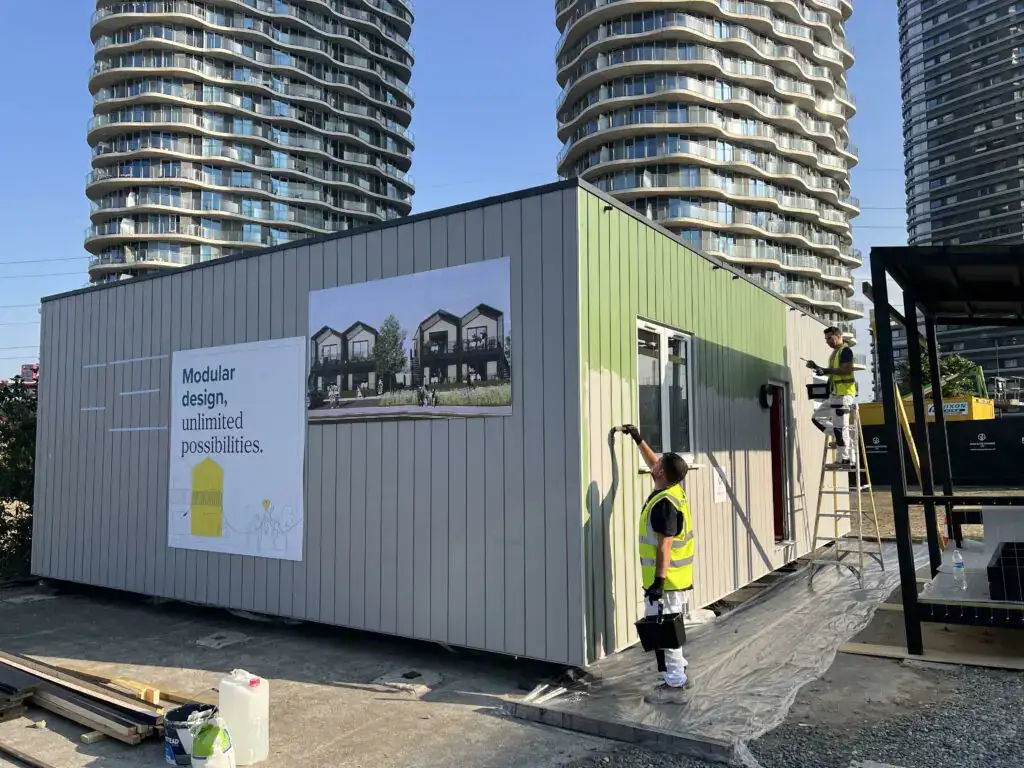 Spraying cladding on a modular building
Coastal conditions
Bournemouth’s position on the bay is lovely to live with and hard on paint. These are the four things we plan around.
Close to the sea, salt settles on walls and cladding. Left on the surface it stops new paint bonding, so every elevation is washed down first.
South-facing walls fade and chalk faster. We use exterior coatings made to hold their colour, and avoid painting surfaces too hot to touch.
Rain blown in off the bay finds any crack or bare patch. Repairs and sealing come before the finish coats, not after.
Paint needs a dry surface and the right temperature while it cures, so in the cooler months we work to the forecast and the day’s dew point.
Spray or roller
We recommend a method once we have seen the surface, how big the job is and what is around the building.
Best for large areas of profiled cladding, industrial units and modular buildings. A sprayed coat reaches into the ribs of the sheet and dries without roller marks, and covers a big elevation far faster.
Right for houses, smaller walls, detailed trim and anywhere overspray would be a risk. Slower on big areas, but precise, and easy to work around neighbours and parked cars.
Preparation
Higher walls and gable ends are reached from mobile towers, which our PASMA-trained team erect and move safely along the building.
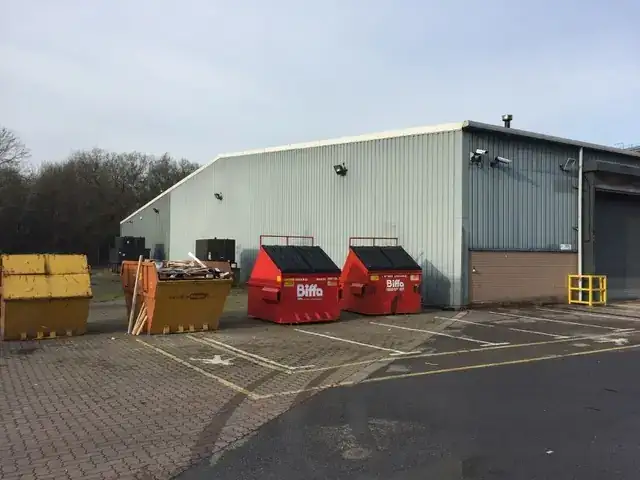
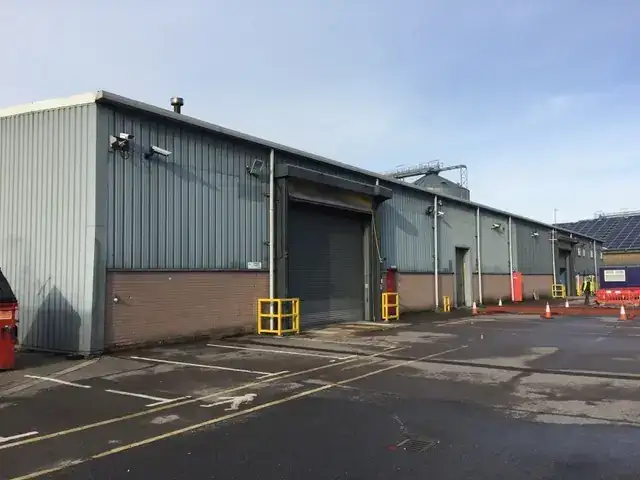 Commercial factory, Weymouth
Projects
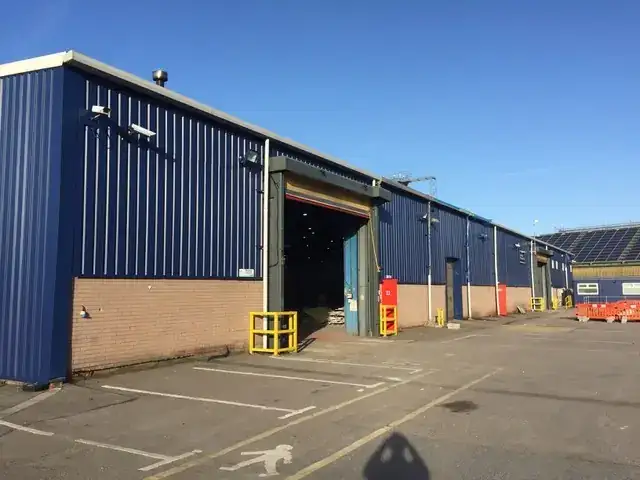
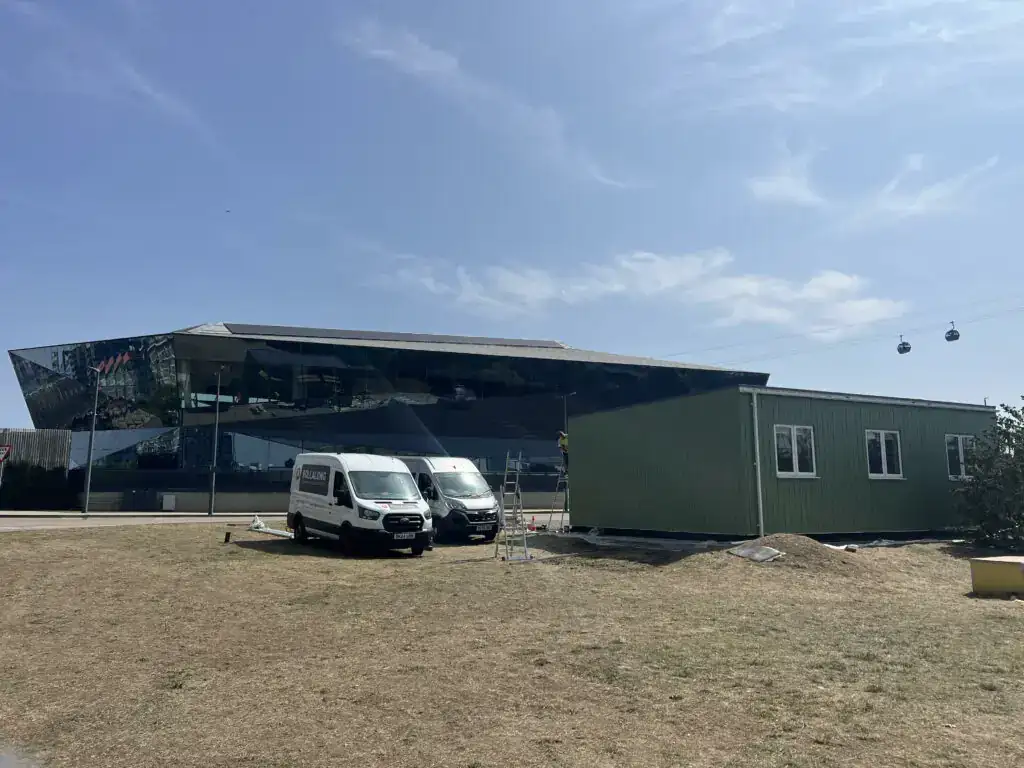
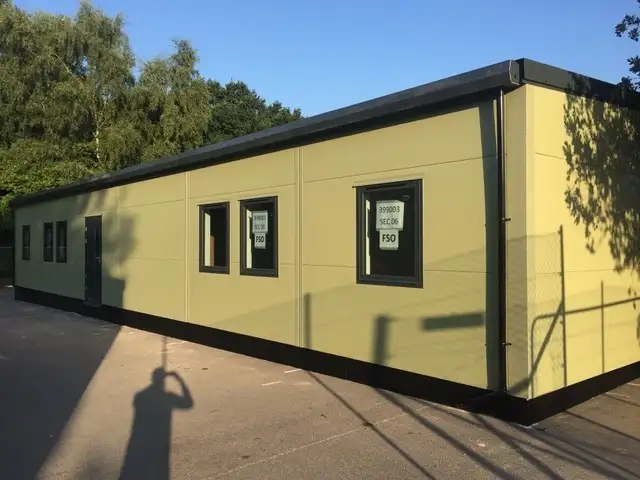
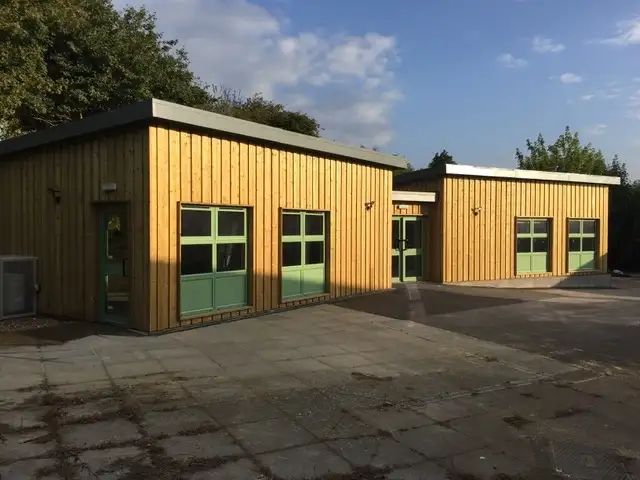
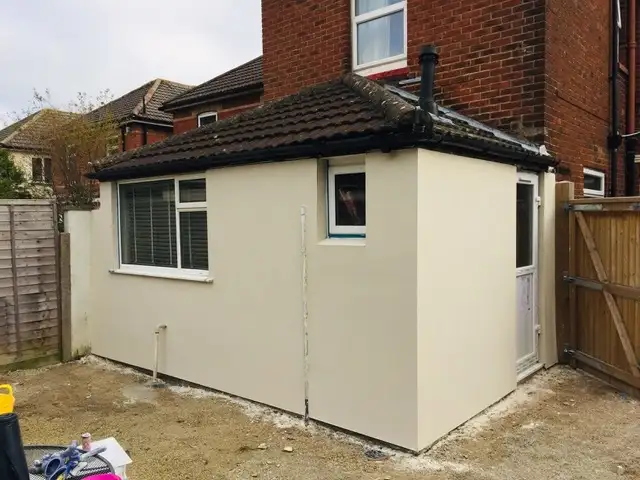
Factory cladding sprayed in Weymouth, modular buildings decorated outside, and a house extension in Poole.
FAQs
Late spring to early autumn gives the longest dry spells and the warmest surfaces. Coatings need a dry surface and suitable temperatures while they cure, so outside that window we plan around the forecast and are honest if a job should wait.
For large areas of profiled metal cladding, spraying usually gives a more even coat and reaches into the profile better than a roller. Small areas, touch-ups and detailed trim are often quicker by brush and roller. We recommend one or the other once we have seen the building.
Anything we are not painting is covered or masked first: glazing, doors, signs, plant and the ground below. We also look at wind direction and where vehicles are parked, and move the work to another elevation if conditions are wrong.
Yes. Alongside commercial elevations we paint the exterior of homes, using brush and roller where spraying would be impractical. Tell us what needs doing and we will come and look.
Free quotes
Send a few photos of the building on WhatsApp or by email, or use the form, and we will arrange a visit and a free quote.
Free, no-obligation quote from our Bournemouth team